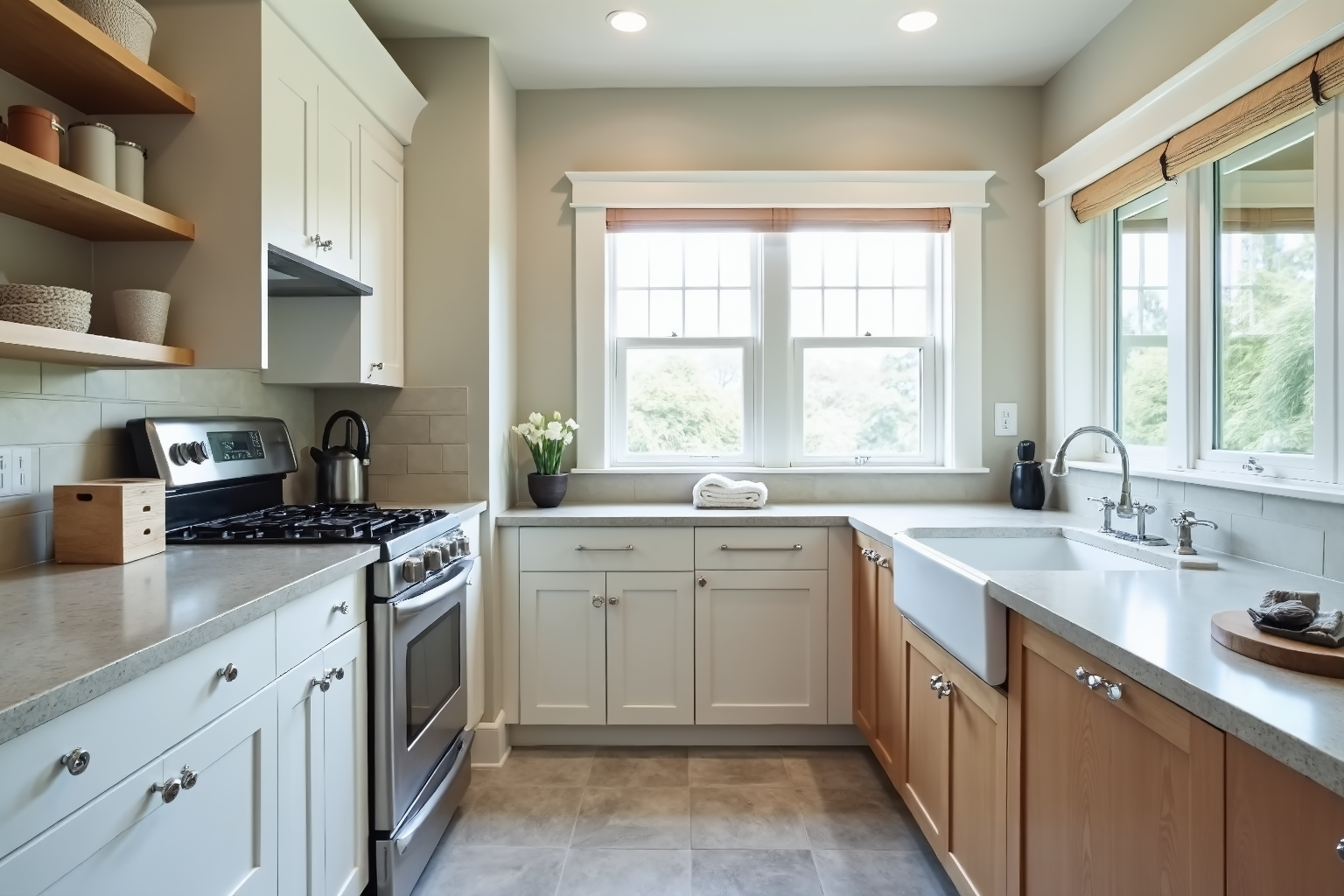
Kitchen vs. Bathroom Remodels: Which Offers a Better Return on Investment?
Kitchen vs. Bathroom Remodels: Which Offers the Best ROI?
A kitchen or bathroom remodel represents a significant investment, with returns varying based on project scope and market alignment. Kitchens typically offer higher ROI, especially with targeted updates like cabinet or countertop replacements, which can recoup 70-80% of costs according to industry data. Full renovations, while more expensive, often yield only 50-70% returns due to higher costs and fluctuating buyer demand. Bathrooms, though generally yielding 50-65% returns, remain valuable when upgraded with energy-efficient fixtures, new flooring, or improved ventilation. These projects attract broad buyer interest but require careful selection to avoid over-investing in niche features like luxury tubs that may not align with market preferences. The key to success lies in balancing cost-effective upgrades with current trends to maximize both financial returns and functional appeal.
Kitchens excel in ROI when renovations focus on practicality and current design trends rather than personalization. Minor refreshes, such as updating cabinetry or countertops, provide substantial returns without the risks of structural changes. However, full gut renovations can dilute profitability if not executed strategically, as buyers may prioritize move-in readiness over customized layouts. Aligning choices with market demands is critical—outdated materials or overly unique designs can reduce appeal and inflate expenses. For instance, a kitchen update adding $50,000 to a home’s value might cost $60,000, recovering 83% of expenses. Even partial cost recovery remains beneficial when paired with enhanced living conditions, underscoring the importance of prioritizing upgrades that deliver measurable value while meeting personal needs.
Bathroom remodels, while yielding slightly lower returns than kitchens, still offer solid financial and functional benefits. Upgrades like energy-efficient lighting or water-saving fixtures appeal to eco-conscious buyers and can increase home value without excessive costs. New flooring or improved ventilation also contribute to a modern, inviting space that attracts a wide audience. However, high-end features such as freestanding soaking tubs may not justify their expense in markets favoring simplicity. The goal is to identify upgrades that balance cost and appeal, ensuring renovations enhance both property worth and daily usability. For example, a bathroom update costing $30,000 that adds $25,000 to a home’s value achieves a 83% recovery rate, demonstrating how strategic choices can optimize returns.
But the distinction between value-add and cost recovery is central to evaluating renovation projects. Value-add refers to the increase in a home’s market value, while cost recovery measures the percentage of expenses recouped upon resale. These metrics often differ; a kitchen renovation might add $50,000 to a home’s value but only recover 80% of its $60,000 cost. Even if full recovery isn’t achieved, the residual value boost remains significant, particularly when combined with improved living conditions. This principle applies to bathrooms as well, where targeted upgrades can enhance appeal without requiring full cost recoupment. Understanding this dynamic helps homeowners make informed decisions that align with both financial goals and lifestyle needs.
Successful kitchen or bathroom remodels require a strategic blend of personal preferences and market awareness. Homeowners should prioritize durable, trend-aligned materials and consult real estate experts to ensure renovations meet buyer expectations. Staying attuned to current design trends—such as open layouts in kitchens or minimalist aesthetics in bathrooms—ensures projects remain competitive. By focusing on upgrades that deliver both functional improvements and measurable value, renovations can transform into smart investments. This approach not only enhances property worth but also creates spaces that are enjoyable and practical, maximizing the long-term benefits of the renovation.
Kitchen Remodel ROI: A Deep Dive
Kitchen remodels consistently rank among the top home improvement projects for return on investment (ROI), with homeowners often recouping 50-75% of costs upon resale. This impressive ROI stems from the kitchen’s central role in daily life and its impact on a home’s perceived value. A well-designed, functional kitchen significantly enhances property appeal to buyers, potentially increasing selling prices. For real estate investors, strategic remodels can also boost rental income potential, further amplifying returns.
Several key factors influence kitchen ROI, including appliance upgrades, cabinet refacing or replacement, countertop materials, and layout changes. Energy-efficient appliances add value for environmentally conscious buyers while offering long-term cost savings. Upgrading to stainless steel appliances modernizes kitchens and increases market appeal. Cabinet refacing provides a cost-effective refresh, while replacement improves aesthetics and storage. Durable countertop materials like quartz or granite elevate perceived value, and layout changes enhance functionality despite higher costs.
Minor kitchen remodels focusing on cosmetic upgrades typically yield higher ROI than major overhauls. Cost-effective improvements like replacing outdated hardware, repainting walls, and updating lighting fixtures substantially enhance appearance without extensive demolition. These minor changes often deliver greater percentage returns compared to large-scale renovations. For instance, simply refreshing cabinet hardware and lighting modernizes a kitchen affordably while maximizing ROI relative to project expense.
When planning a remodel, balance desired upgrades with potential ROI by avoiding over-personalization that limits broad buyer appeal. Focus on universally attractive features like energy-efficient appliances, modern fixtures, and improved functionality to maximize value recovery. Consulting real estate professionals provides insights into local market trends and buyer preferences, ensuring informed decisions that optimize your kitchen remodel’s financial return.
Bathroom Remodel ROI: Factors to Consider
Bathroom remodels, while incredibly valuable for enhancing daily living, often present a slightly different return on investment (ROI) landscape compared to kitchen renovations. Typically, homeowners can expect to recoup between 50% and 65% of their project costs upon resale, a figure that underscores the importance of strategic planning. Key factors influencing bathroom remodel ROI include the selection of fixtures, such as toilets, sinks, and showers, along with the quality of flooring, the effectiveness of ventilation systems, and the overall design aesthetic.
Meanwhile, for instance, opting for a low-flow toilet and a water-saving showerhead not only aligns with eco-conscious trends but can also appeal to buyers looking for energy-efficient homes, potentially boosting your return. Ventilation is another critical, often overlooked, aspect of a bathroom remodel that impacts both its functionality and perceived value.
A well-ventilated bathroom prevents moisture buildup, which can lead to mold and mildew issues, and is a key concern for potential buyers. Investing in a high-quality exhaust fan is not just about maintaining a healthy environment; it also demonstrates attention to detail that can positively influence a home’s perceived value. Similarly, the choice of flooring materials can significantly impact ROI.
While high-end materials like marble may look appealing, they might not yield the best return compared to more durable and cost-effective options like porcelain tile, which is both water-resistant and visually attractive. When considering a bathroom renovation, it’s crucial to understand that not all upgrades are created equal in terms of ROI. Luxury additions, such as high-end soaking tubs or elaborate custom showers, might not yield as high a return as more practical upgrades that enhance the daily functionality of the space. While these features might be appealing to a specific buyer demographic, they often come with a higher price tag and may not translate to a proportional increase in resale value. Instead, focusing on improvements that cater to a broader range of preferences, such as a well-designed shower with modern fixtures and ample storage solutions, can be a more strategic approach to maximizing your return. This is also where understanding your local real estate market trends becomes vital, as buyer preferences can vary significantly by location and demographics. Furthermore, the overall design aesthetic of the bathroom plays a crucial role in its perceived value. A cohesive and well-thought-out design that aligns with current market trends can significantly enhance the appeal of the space. This includes selecting a color palette that is both timeless and appealing, and ensuring that all fixtures and finishes complement each other. A dated or poorly designed bathroom can be a significant deterrent for potential buyers, whereas a modern, updated bathroom can be a major selling point. Therefore, investing in professional design guidance can be a worthwhile investment to ensure that the renovation aligns with market expectations and maximizes your potential ROI. While bathroom remodels may not always offer the same high ROI as kitchen renovations, they are still a valuable home improvement project that can significantly enhance both your living experience and your home’s value. By prioritizing practical upgrades, focusing on durable and cost-effective materials, and creating a design that appeals to a broad range of buyers, homeowners can make informed decisions that maximize their return on investment. A strategic approach to bathroom renovation, combined with an understanding of local real estate trends, can lead to a successful project that not only improves your home but also adds value for the future.
Material Choices and Their Impact on ROI
Material choices play a pivotal role in determining the return on investment (ROI) for both kitchen and bathroom remodels. Selecting durable, mid-range materials often strikes the best balance between cost and value, maximizing your investment while creating appealing spaces. While the allure of high-end materials is undeniable, their impact on resale value may not be proportional to their higher cost. For instance, installing premium marble countertops in a kitchen remodel might not yield a significantly higher return compared to high-quality quartz or granite, which offer similar aesthetic appeal and durability at a lower price point. Focusing on quality, durable materials in the mid-range often provides the greatest value proposition for homeowners. In bathroom remodels, choosing standard-sized, readily available tiles can be more cost-effective than custom or oversized tiles, without compromising the overall aesthetic.
This approach allows homeowners to allocate their budget strategically, focusing on impactful upgrades that resonate with potential buyers. Understanding current market trends is crucial when making material selections. Consulting with real estate professionals can provide valuable insights into buyer preferences in your local market, helping you choose materials that enhance both the aesthetic and market value of your home. For example, while brushed nickel fixtures were once highly sought after, matte black finishes are currently trending in many markets.
Incorporating these trends judiciously can increase buyer appeal and potentially boost your home’s resale value. Furthermore, the principle of cost-recovery versus value-add plays a significant role in material selection. While luxury materials might enhance your home’s aesthetic appeal and personal enjoyment (value-add), they might not translate into a dollar-for-dollar return upon resale (cost-recovery).
Meanwhile, a bathroom remodel featuring a high-end soaking tub might increase your home’s value, but the return might be less than the initial investment in the tub itself. Conversely, installing a standard, energy-efficient shower with updated fixtures might offer a higher cost-recovery percentage. Therefore, prioritizing durable, mid-range materials with broad market appeal often optimizes both cost-recovery and value-add potential, ensuring a smart investment that enhances your home’s value and appeal.
Value-Add vs. Cost Recovery
Understanding the distinction between value-add and cost recovery is crucial for making informed remodeling decisions. Value-add refers to the net increase in your home’s market value resulting from renovations. For instance, a well-executed kitchen remodel might increase your home’s appraisal value by $20,000. Cost recovery, on the other hand, represents the percentage of your project expenses you recoup upon selling the home. If that same kitchen remodel cost $25,000, the cost recovery would be 80% ($20,000/$25,000). It’s entirely possible to add significant value to your home without achieving full cost recovery, particularly with high-end renovations. A luxurious bathroom remodel with premium fixtures and finishes might boost your home’s value but not fully recoup the initial investment due to the higher project cost. Focusing on upgrades with broad market appeal is key to maximizing both value-add and cost recovery.
Neutral paint colors, updated fixtures, and energy-efficient appliances tend to resonate with a wider range of buyers, increasing the likelihood of a higher return. In the real estate market, kitchen and bathroom remodels are consistently ranked among the top value-boosting home improvements. A kitchen remodel, for example, can significantly enhance a home’s appeal by modernizing outdated spaces and improving functionality. Replacing worn-out cabinets, countertops, and appliances not only adds aesthetic value but also improves the overall usability of the kitchen, a major selling point for potential buyers. Similarly, a bathroom remodel can elevate a home’s value by creating a spa-like retreat with updated fixtures, improved ventilation, and enhanced aesthetics. These upgrades not only add to the home’s market value but also create a more comfortable and enjoyable living experience for homeowners.
Here’s the thing: when considering ROI, it’s essential to remember that market trends play a significant role. Features considered desirable in one market might not hold the same appeal in another. Consulting with a local real estate agent can provide valuable insights into current buyer preferences in your area. They can advise on which upgrades are most likely to resonate with potential buyers and offer the highest return on investment.
For example, in some markets, energy-efficient appliances and smart home features are highly sought after, while in others, luxurious finishes and high-end materials might be more appealing. Understanding these nuances can help you make strategic remodeling decisions that maximize both the value of your home and your eventual return on investment.
By striking a balance between desirable upgrades and cost-effective solutions, homeowners can ensure their renovations contribute to both immediate enjoyment and long-term financial gain. This approach not only enhances the home’s livability but also positions it favorably in the real estate market, maximizing its potential resale value.
Maximizing Your Remodeling ROI: Tips and Tricks
Maximizing your return on investment (ROI) for kitchen or bathroom remodels requires a strategic approach that balances cost-effective upgrades with broad market appeal. Prioritizing improvements that enhance functionality, energy efficiency, and overall aesthetic appeal will attract a wider range of buyers and contribute to a higher resale value. For instance, in a kitchen remodel, replacing outdated appliances with energy-efficient models not only reduces utility costs for future homeowners but also aligns with the growing demand for sustainable living. Similarly, in a bathroom, swapping a standard showerhead for a low-flow model adds value while conserving water. These types of upgrades offer both immediate benefits and long-term cost savings, making them attractive selling points. Focusing on improvements that offer both immediate benefits and long-term cost savings, making them attractive selling points. Avoid overly personalized design choices, as neutral palettes and classic styles tend to resonate with a broader audience.
While a vibrant, mosaic backsplash might suit your personal taste, a potential buyer might see it as a costly element to replace, potentially impacting your ROI. Opting for timeless subway tile or a neutral-toned backsplash offers a clean, modern look that appeals to a wider range of aesthetic preferences. This principle extends to bathroom remodels as well, where choosing classic white fixtures over brightly colored ones can make the space feel more spacious and universally appealing. Thoroughly research current market trends and consult with real estate professionals to understand buyer preferences in your area. Understanding local market dynamics is crucial for making informed decisions that maximize your ROI. For example, if open-concept kitchens are in high demand in your area, consider removing a non-load-bearing wall to create a more spacious and modern feel. In bathroom remodels, features like double vanities and walk-in showers are often highly sought after and can significantly boost resale value. Consulting with a local real estate agent can provide valuable insights into current buyer preferences and help you prioritize upgrades that yield the highest returns. By aligning your remodeling choices with market demands, you can ensure that your investment translates into tangible value. Beyond the aesthetic and functional upgrades, consider the less glamorous but equally important aspects of a remodel, such as improving ventilation and insulation. These improvements may not be immediately visible, but they contribute significantly to the overall comfort and efficiency of the home, factors that discerning buyers highly value. Proper ventilation in a bathroom prevents moisture buildup and mold growth, safeguarding air quality and preventing costly repairs down the line. Similarly, upgrading insulation in a kitchen can significantly reduce energy consumption and lower utility bills, a strong selling point for cost-conscious buyers. These practical improvements, while often overlooked, can add significant value to your home and boost your ROI. Remember that a well-planned remodel can significantly increase your home’s market value, even if you don’t recoup every dollar spent. While cost recovery is a key consideration, the added value translates into a higher selling price and a more competitive position in the market. Focusing on quality materials, meticulous workmanship, and thoughtful design choices will create a lasting impression on potential buyers and contribute to a higher perceived value of your property. A successful remodel balances personal preferences with market demands, creating a space that you enjoy while simultaneously enhancing your home’s resale potential.
Conclusion: Making Informed Remodeling Decisions
The decision between a kitchen or bathroom remodel hinges on individual circumstances, budgetary constraints, and desired outcomes. Both kitchen and bathroom renovations offer significant potential to enhance your home’s value and functionality, impacting both its market appeal and your personal enjoyment. By carefully considering factors like material choices, project scope, and prevailing market trends, homeowners can make informed decisions that maximize their ROI and achieve their remodeling goals. For example, a minor kitchen remodel focusing on cabinet refacing and energy-efficient appliance upgrades might yield a higher ROI than an extensive bathroom overhaul involving luxury fixtures and custom tile work. Understanding these nuances is crucial for informed decision-making. Evaluating your home’s current condition, your personal needs, and your long-term goals is paramount. Are you renovating to enhance your living experience or primarily to boost resale value? This question significantly influences project prioritization and budget allocation.
Consulting with experienced real estate professionals and contractors can provide valuable market insights and cost estimates, enabling you to make strategic choices aligned with your objectives. A well-planned kitchen remodel, for instance, can transform a dated space into a modern culinary haven, significantly increasing your home’s market value while enhancing its functionality and aesthetic appeal. Replacing outdated appliances with energy-efficient models not only modernizes the space but also appeals to environmentally conscious buyers, a growing segment of the real estate market.
Similarly, a well-executed bathroom renovation can create a spa-like retreat, adding value and enhancing daily living. Focusing on moisture-resistant materials, proper ventilation, and updated fixtures can prevent costly repairs down the line, further contributing to the long-term ROI of the project. While high-end finishes can be tempting, prioritizing durable, mid-range materials often provides the best balance between cost and value recovery.
Neutral design choices also tend to appeal to a broader range of buyers, maximizing market appeal and resale potential. Maximizing ROI involves a delicate balance between cost-effective upgrades and desirable features that resonate with current market trends. Continuous research and consultation with industry experts are essential for staying informed about evolving buyer preferences and making strategic renovation choices that yield the highest returns.